Do I need a mammogram every year? If I have a family history of breast cancer, should I get one sooner? What if hurts?
You have questions about mammograms, and finding answers can be challenging. There is a lot of information out there. Sorting through it can be overwhelming, and well...confusing.
Here are the answers to some of the most common questions about mammograms.
What Is a Mammogram?
A mammogram is a simple, easy screening that uses low-dose x-ray to look for abnormalities in the breast tissue. A mammogram allows a doctor to see breast tissue in more detail and look for changes in breast tissue that cannot be felt during a breast exam. Think of it as a more detailed screening than your routine breast self exams.
How Is a Mammogram Performed?
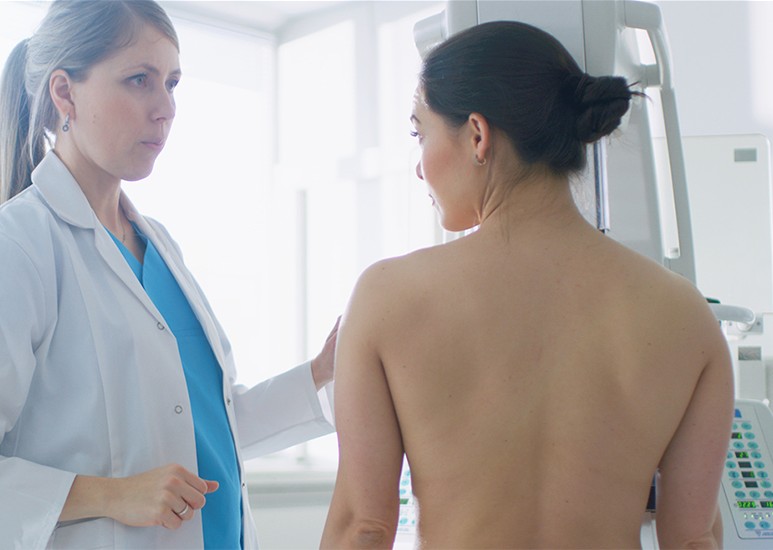
A radiologic technologist places your breasts, one at a time, between an x-ray plate and a plastic plate. These plates are attached to the x-ray machine and compress the breasts to flatten them. This spreads the breast tissue out to obtain a clearer picture.
In a 3D mammogram, the machine captures multiple images of your breast tissue and layers them together for a more complete picture.
A screening mammogram only takes about 20 minutes from start to finish.
When Should I Start Getting Mammograms?
Most women should get their first mammogram at age 40. This valuable screening creates a baseline so that, over time, we can see changes in your breast tissue and more easily identify any abnormalities. After your first mammogram, you should get a mammogram every year.
If you have a family history of breast cancer, talk to your physician about when to get your first screening mammogram. A good rule of thumb is to have your first annual mammogram ten years prior to the earlier breast cancer in your family, but not before age 30 (due to radiation exposure risk). Dependent upon your situation, additional testing such as breast MRI could be considered. Some high-risk patients may need to see a genetic counselor to be evaluated for a hereditary predisposition to cancer.
Does Mammography Really Make a Difference?
Mammography is one of the most effective tools for detecting breast cancer early, often before symptoms develop. Early detection can lead to more treatment options and improve the chances of successful treatment.
Regular screening mammograms can help identify breast cancer at an earlier stage, when it is often easier to treat. That's why mammography remains an important part of breast health for many women.
Are There Risks Associated With Having a Mammogram?
Mammograms are considered safe and are one of the most effective tools for detecting breast cancer early. While mammograms use a small amount of radiation, the benefits of early detection far outweigh the risks for most women.
Some women may experience brief discomfort during the exam, and it's normal to feel anxious about screening or waiting for results. At Community Health Network, our breast care experts are here to answer your questions, provide support and help make the screening process as comfortable as possible.
Will My Insurance Cover My Mammogram?
Most health insurers cover routine screening mammography. However, each insurer has their own guidelines so please contact your insurer to confirm coverage. Community is always here to help you figure out your options with the help of Community's pricing office, which offers an online cost estimator tool for procedures and services.
Schedule Your Mammogram
We hope we've answered your questions about mammograms. Now, you are ready to schedule or walk in to your mammography screening. We offer many convenient locations for mammograms and breast screenings — daytime, evening, or weekend appointments — as well as online scheduling through eCommunity.com and MyChart.
Find a Screening Location