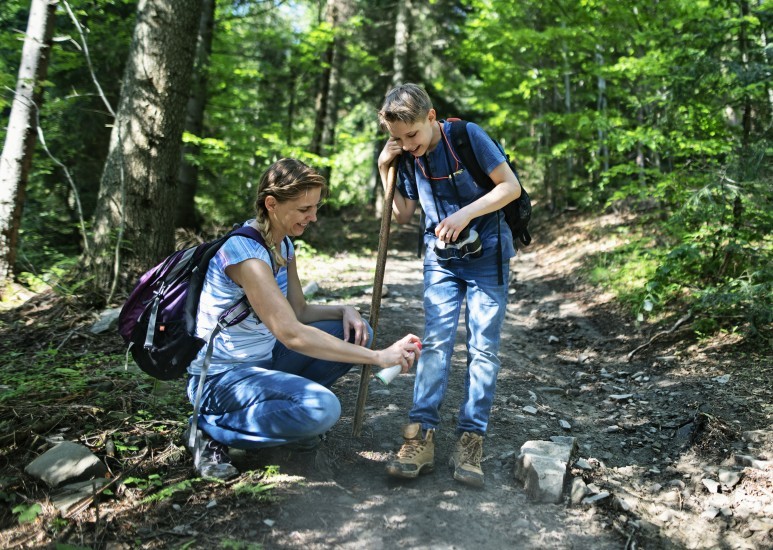
Spring, summer and early fall are great times to enjoy the outdoors. Whether you're hiking a wooded trail, gardening in the backyard, walking the dog or spending the day at a campground, there's one tiny visitor most people hope to avoid: ticks.
Ticks are small, easy to miss and often picked up without realizing it.
You spot one attached to your skin. Now what?
Knowing how to prevent ticks, remove them safely and recognize potential warning signs can help protect you and your family while enjoying the outdoors.
"The goal isn't to keep people indoors," explains Rashmin Adesara, MD, with Community Physician Network. "We want people to enjoy all the activities that come with warmer weather, but a little preparation before heading outside can go a long way in reducing your risk of tick bites."
Where Are Ticks Commonly Found?
Ticks are often found close to the ground in tall grass, brush, leaf litter and wooded areas.
However, you don't have to venture deep into the woods to find ticks. Ticks live in many places outdoors, including in your own yard or neighborhood.
For families across central Indiana, tick safety is especially important during warmer months when outdoor activities are more common.
How To Prevent Tick Bites
The best way to avoid tickborne illness is to prevent tick bites. Before heading outdoors, take a few precautions:
- Wear long sleeves, long pants, socks and closed-toe shoes when spending time in tick-prone areas.
- Tuck pants into socks or boots for added protection.
- Choose light-colored clothing so ticks are easier to spot.
- Use an EPA-registered insect repellent and follow product instructions.
- Treat clothing, shoes and outdoor gear with products containing 0.5% permethrin. Never apply permethrin directly to your skin.
- Walk in the center of trails and avoid high grass, brush and leaf litter when possible.
- Talk to your veterinarian about tick prevention for pets.
Check for Ticks After Being Outdoors
"Many people think they would immediately notice a tick, but that's not always the case," notes Dr. Adesara. "Taking a minute or two to check yourself, your children and your pets after outdoor activities can provide peace of mind and help identify a tick before it becomes a bigger concern.”
When you come inside:
- Check your clothing, shoes, gear and pets for ticks.
- Shower soon after being outdoors to help wash off unattached ticks.
- Do a full-body tick check, including under the arms, in and around the ears, around the waist, behind the knees, between the legs, in the belly button and around the hairline.
- Dry clothing on high heat to help kill ticks that may be on your clothes.
How To Remove a Tick Safely
If you find a tick attached to your skin, don’t panic. Remove it as soon as you can. Dr. Adesara recommends keeping the following do's and don'ts in mind when removing a tick:
Do ✅:
- Use clean, fine-tipped tweezers to grasp the tick as close to the skin's surface as possible.
- Pull upward with steady, even pressure.
- Clean the bite area and your hands with soap and water, rubbing alcohol or hand sanitizer after removal.
- Dispose of the tick by placing it in a sealed container, wrapping it tightly in tape, flushing it or putting it in alcohol.
Don't ❌:
- Twist, jerk or squeeze the tick during removal.
- Crush the tick with your fingers.
- Use home remedies such as petroleum jelly, nail polish, heat or burning the tick with a match. These methods may agitate the tick and increase the risk of infected fluid entering the skin.
- Delay removing the tick once you find it.
"Finding a tick can be unsettling, especially for parents checking a child after a day outdoors," Dr. Adesara notes. "Fortunately, most tick bites can be managed safely when they're identified and addressed promptly."
When Should You Call a Doctor After a Tick Bite?
Most tick bites do not lead to serious illness, but it’s important to pay attention to how you feel afterward.
"The majority of people who find a tick are wondering the same thing: 'Should I be worried?'" says Dr. Adesara. "In many cases, the answer is no. But knowing what symptoms to watch for can help you act quickly if a concern does arise."
Watch for the following symptoms in the days and weeks after a tick bite:
- Rash, especially one that expands or looks like a bullseye
- Fever or chills
- Headache
- Fatigue
- Muscle or joint aches
- Swollen lymph nodes
If you develop any of these symptoms after a tick bite, contact a healthcare provider for guidance.
What To Know About Lyme Disease
Lyme disease is caused by bacteria transmitted through the bite of an infected blacklegged tick, sometimes called a deer tick. During the immature nymph stage, these ticks can be especially small and difficult to detect.
While Lyme disease has become more common in Indiana in recent years, not every tick carries Lyme disease, and not every tick bite leads to infection. In most cases, a blacklegged tick must remain attached for approximately 36 to 48 hours before Lyme disease transmission becomes likely.
Symptoms of Lyme disease can vary and may develop over time, but early recognition and treatment can help prevent more serious complications involving the joints, heart and nervous system. Ticks can also transmit other illnesses, including ehrlichiosis, anaplasmosis and Rocky Mountain spotted fever, and have been associated with Alpha-gal syndrome, a red meat allergy.
Prompt tick removal and early medical guidance can help reduce risk and support timely treatment when needed. "The earlier Lyme disease is recognized, the easier it typically is to evaluate and treat," emphasizes Dr. Adesara.
Stay Informed and Stay Safe
If you have concerns about a tick bite, symptoms after spending time outdoors or questions about Lyme disease prevention, your primary care provider can help evaluate your symptoms and recommend next steps.
For additional information about Lyme disease, symptoms and prevention, visit the CDC and the Indiana Department of Health.
A little awareness can go a long way. With the right information, you can spend more time outside with confidence.
About Rashmin Adesara, MD
Rashmin Adesara, MD, is a board-certified family medicine physician with Community Physician Network Family Medicine Care. He cares for patients of all ages and has special interests in diabetes management, weight loss, preventive care, wound care and helping patients improve their overall health.
Dr. Adesara earned his medical degree from B. J. Medical College in Ahmedabad, India, and completed his family medicine residency at Conemaugh Memorial Medical Center in Johnstown, Pennsylvania. Before joining Community Health Network in 2015, he practiced family medicine and wound care in both India and Illinois.
As a family medicine physician, Dr. Adesara enjoys caring for the whole patient and helping individuals better understand their health to prevent future complications. Outside of work, he enjoys football, cricket, music, traveling and spending time with his wife and two children.
Dr. Adesara is accepting new patients and is available for appointments at Community Physician Network Family Medicine Care in Hillsdale.