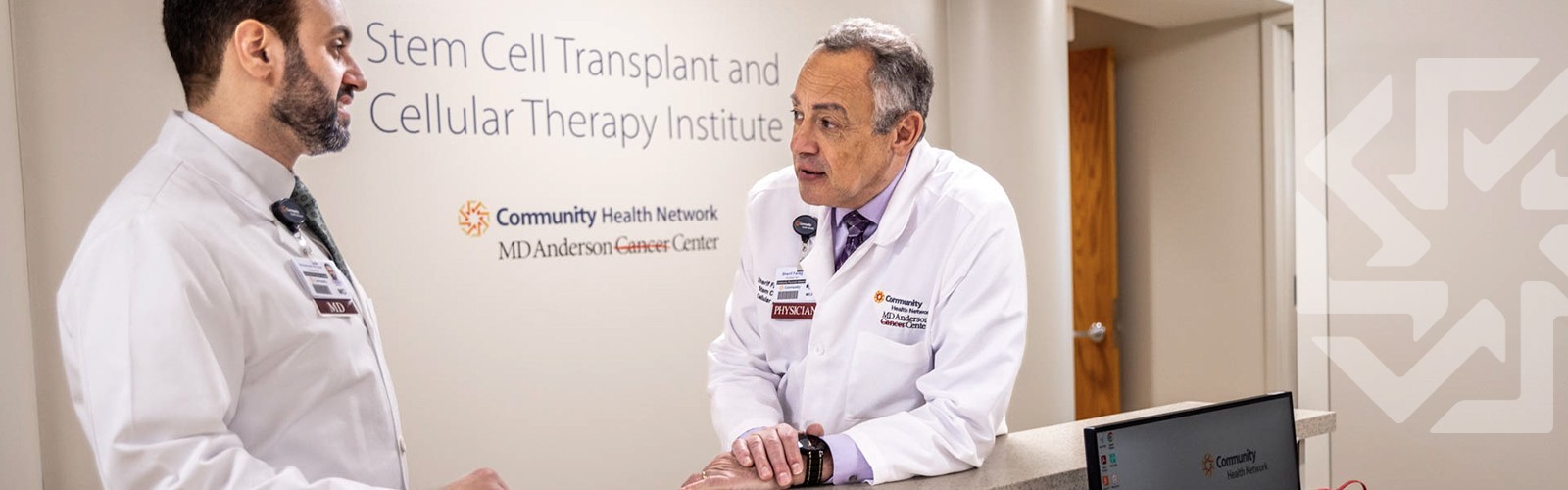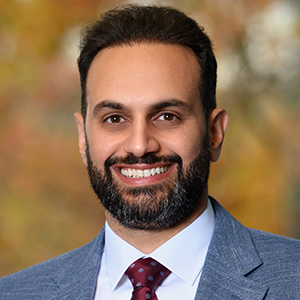
Dr. Farag and Dr. Abu Zaid lead the Stem Cell Transplant and Cellular Therapy Institute

Stem Cell Transplant and Cellular Therapy Institute

To help bring innovative care close to home, we’ve enhanced the continuum of cancer care we provide within our network.

Community Health Network MD Anderson Cancer Center’s Stem Cell Transplant and Cellular Therapy Institute treats a variety of cancer and non-cancer conditions effectively and efficiently — applying state-of-the-art technologies in dedicated facilities backed by an experienced team.

Contact Us

Welcome From the Team

Stem cell transplant team

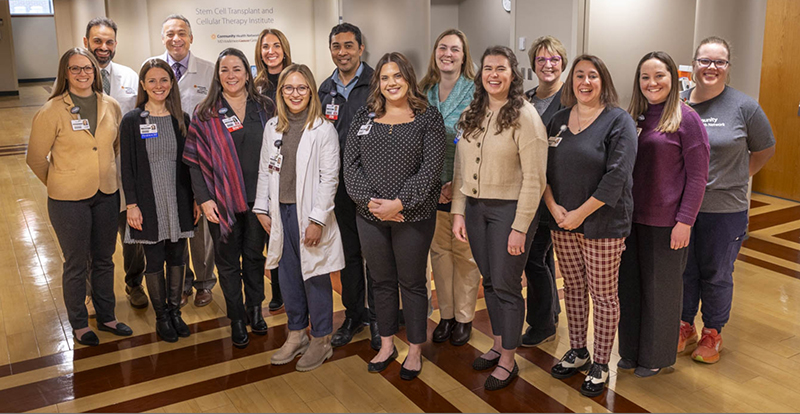
We follow a team approach to treating malignant and nonmalignant blood disorders. The Institute brings together physicians, advanced practice providers, quality specialists, coordinators and nurses with extensive experience in stem cell transplant and cellular therapy. Through our multidisciplinary approach, we provide comprehensive services to support patients before, during and after their transplant. We also push the frontiers of stem cell therapy and treatment through cutting-edge research.

Celebrating Our First Stem Cell Transplant

Community Health Network MD Anderson Cancer Center marks the official launch of its Stem Cell Transplant and Cellular Therapy Institute, admitting its first stem cell transplant patients as a program.

Meet the Providers

Sherif Farag, MD, Medical Director

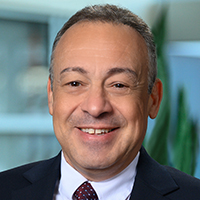
Sherif Farag, MD, medical director Stem Cell Transplant and Cellular Therapy InstituteMedical Director Dr. Sherif Farag brings more than 30 years of experience to the Stem Cell Transplant and Cellular Therapy Institute. His background includes all areas of hematological cancers, transplantation and cellular therapies.

Previously, Dr. Farag was the director of the Bone Marrow and Blood Stem Cell Transplantation and Immune Cell Therapy Program and served as Professor of Medicine in Hematology and Oncology at Indiana University. He was also the medical director for the Blood and Bone Marrow Transplant Laboratory at The Ohio State University.

Dr. Farag has a deep commitment to advancing transplantation and cellular therapy research — with more than 100 peer-reviewed medical publications and a strong record of funding by the National Institutes of Health. He is a member of the American Society of Transplantation and Cellular Therapy, the American Society of Hematology and the American Society of Clinical Oncology.

Mohammad Abu Zaid, MD

Mohammad Abu Zaid, MD, stem cell transplant expertDr. Mohammad Abu Zaid specializes in the treatment of blood cancers, stem cell transplantations, and cellular therapies. He has a special interest in research including the development of early clinical trials, biomarker discovery and survivorship research.

Prior to joining Community, Dr. Abu Zaid was the Site Director of Transplantation and Cellular Therapy Program at Perlmutter Cancer Center in New York and Clinical Associate Professor at NYU Grossman School of Medicine. In addition, he served as an Assistant Professor of Medicine and on the Hematology and Medical Oncology Faculty at Indiana University.

Dr. Abu Zaid has authored more than thirty publications and peer-reviewed publications, has been awarded several grants and has received research, teaching and leadership awards. He is a member of the American Society for Transplantation and Cellular Therapy and the American Society of Clinical Oncology.

Treatment Options

Treatment options include blood stem cell transplant, CAR T-cell therapy for blood cancers and TIL therapy for solid tumors. Learn more below.

Blood Stem Cell Transplant

What is a blood stem cell?

These special cells generate most of the body’s blood and immune cells. They mostly live in bone marrow — the spongy tissue inside our bones — and circulate in the blood.

What is a blood stem cell transplant?

This medical procedure is often the only potentially curative option for people diagnosed with some cancers and other life-threatening diseases.

Autologous stem cell transplants use a patient’s own previously collected stem cells to replace stem cells destroyed by high-dose chemotherapy. Hematologist oncologists (doctors who specialize in blood diseases and cancers) typically recommend autologous transplants for select cancers still sensitive to chemotherapy at lower doses.

Allogeneic stem cell transplants replace a patient’s stem and immune cells with healthy stem cells from a donor. When cancer is resistant to chemotherapy, an allogeneic transplant can provide an immunological response against the patient's cancer.

What conditions are transplants used for?

Blood stem cell transplants can help treat blood cancers such as:

Leukemia and Related Disorders

  • Acute lymphoblastic leukemia (ALL)
  • Acute myeloid leukemia (AML)
  • Chronic lymphocytic leukemia (CLL)
  • Chronic myelogenous leukemia (CML)
  • Myelodysplastic syndromes (MDS)
  • Myelofibrosis
  • Chronic myelomonocytic leukemia (CMML)

Lymphoma

  • Hodgkin Lymphoma (HL)
  • Non-Hodgkin Lymphoma (NHL)
  • Waldenström’s macroglobulinemia (WM)

Other

  • Aplastic anemia
  • Thalassemia
  • Auto-immune disease
  • Paroxysmal nocturnal hemoglobinuria (PNH)
  • Hemophagocytic lymphohistiocytosis (HLH)
  • Sickle cell disease
  • Immunodeficiency syndromes
  • Germ cell tumors (including testicular and some ovarian cancers)

Plasmacytic

  • Amyloidosis
  • Multiple myeloma

CAR T-Cell Therapy for Blood Cancers

What is CAR T-cell therapy?

Chimeric antigen receptor (CAR) T-cell therapy is a personalized treatment that engineers a patient’s own immune system to more effectively target cancer.

Certain immune system cells, called T-cells, can potentially identify and remove cancer cells in the body.

CAR T-cell therapy inserts a new gene into T-cells collected from the blood — improving their ability to target cancer cells. The modified cells (called CAR T-cells) are then infused into a patient after chemotherapy to begin fighting cancer.

What conditions does CAR T-cell therapy treat?

CAR T-cell therapy is currently approved for treatment of blood cancers, including:

  • Leukemia
    • Acute lymphoblastic leukemia (ALL)
    • Chronic lymphocytic leukemia (CLL)
  • Non-Hodgkin lymphoma (NHL)
    • Diffuse large B-cell lymphoma (DLBCL)
    • Follicular lymphoma
    • Mantle cell lymphoma
  • Multiple myeloma

TIL Therapy for Solid Tumors

What is TIL therapy?

TIL therapy is an immunotherapy that targets solid tumors. Community Health Network MD Anderson Cancer Center is the first in Indiana to offer this cutting-edge procedure for advanced melanoma.

The first step in the process is to separate lymphocyte (immune) cells that recognize and fight the cancer from the malignant cells in the tumor. Over the next several weeks, these cells multiply into billions of cancer-fighting cells. When the cells are ready, the patient gets chemotherapy to prepare their immune system to receive the cancer-fighting cells back into their body. Through an infusion process, billions of immune cells are pushed into the bloodstream while a high-dose protein is administered to help the immune cells aggressively attack the tumor.

Dr. Sherif Farag explains more about TIL therapy in the video.

What conditions does TILs cell therapy treat?

At Community MD Anderson, TIL therapy is used to treat advanced or metastatic melanoma that hasn’t responded to traditional treatments. Treatment is coordinated across multiple specialty teams, including stem cell transplant, skin cancer surgical oncology and medical oncology.

The Patient Journey

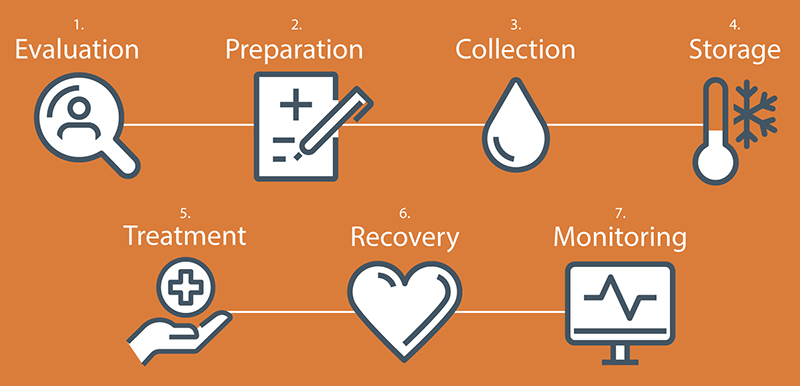
Stem cell transplant patient journey

1. Evaluation

Your care team will decide if stem cell transplantation or CAR T-cell therapy is right for you.

2. Preparation

A nurse coordinator will work with your insurance provider and help schedule appointments.

3. Collection

Stem cells are collected from your bloodstream or from a donor.

4. Storage

Collected stem cells may be infused fresh or be frozen in the laboratory until ready for infusion.

5. Treatment

You will be admitted for chemotherapy, followed by stem cell infusion.

6. Recovery

You will remain in hospital until your blood cell counts return to normal.

7. Monitoring

After release, our team will continue to monitor you for side effects or infection.

Stem Cell Transplant Research

Stem cell research icon

An essential part of lifesaving stem cell transplant procedures is preventing complications and making them safer.

Dr. Farag and his team have published breakthrough research on reducing the risk of acute graft-versus-host disease (GVHD) — a severe side effect that can affect more than 30 percent of transplant patients.

The Institute also includes research personnel dedicated to improving treatment for hematologic malignancies.

Community MD Anderson Partnership

Community Health Network MD Anderson Cancer CenterThrough our partnership with MD Anderson Cancer Center, the Stem Cell Transplant and Cellular Therapy Institute is connected to one of the largest and most advanced facilities in the world for stem cell transplants. The partnership represents a full clinical and operational integration of Community’s cancer services with MD Anderson across all of Community’s sites of cancer care.

MD Anderson’s clinicians perform more than 850 stem cell transplant procedures for both adults and children each year, surpassing any other center in the nation, and it is recognized as a specialized center for stem cell transplants by the National Marrow Donor Program.

Contact Us

If you’re a patient looking for more information, or a physician looking to refer a patient, call the Stem Cell Transplant and Cellular Therapy Institute at:

317-621-3300

Stem Cell Transplant and Cellular Therapy Institute
Community MD Anderson Cancer Center - North
7979 N. Shadeland Avenue, Indianapolis, IN 46250
Fax: 317-621-3301